 Calories AI Calculator
What macros actually are
Macronutrients — protein, carbohydrates and fat — are where all your calories come from: protein and carbs at 4 kcal per gram, fat at 9. Calorie counting tells you how much you're eating; macro tracking tells you what — which is why it's the tool of choice for losing fat while keeping muscle, staying full, and fueling training.
Beginner macro targets
- Weight loss: protein 0.7–1 g per lb of bodyweight, then split the remaining calories between carbs and fat however you enjoy eating. Protein is the lever that preserves muscle and kills snack cravings.
- Muscle gain: same protein target, small calorie surplus, carbs around training.
- No idea yet? Start at 30% protein / 40% carbs / 30% fat and adjust after two weeks of data.
The old way vs. the photo way
Traditional macro tracking means weighing every ingredient and looking up each one in a database — accurate, and abandoned by most people within days. The beginner-friendly alternative: let AI estimate the split from a photo, and spend your willpower on food choices instead of data entry.
Track macros in Calories AI Calculator
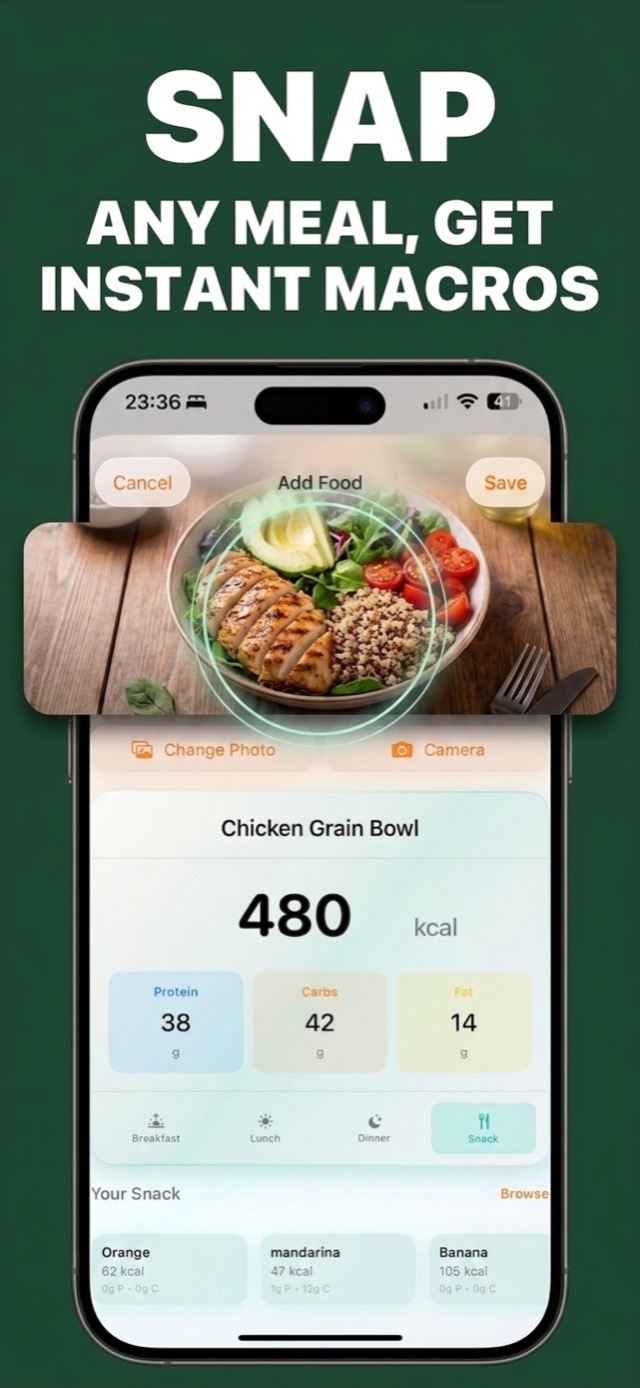
- Snap your meal — the AI returns calories and grams of protein, carbs and fat (e.g. Chicken Grain Bowl: 480 kcal, P38 / C42 / F14).
- Adjust anything that looks off; the app remembers your corrections for next time.
- Watch the Today screen totals — protein, carbs and fat run right under your calorie ring.
- Check Insights weekly to see your average macro split and spot patterns (e.g. protein crashes on weekends).
Common beginner mistakes
- Chasing gram-perfect days. ±10 g on any macro is noise. Consistency over weeks is the signal.
- Ignoring cooking fat. Oil is the stealthiest 120 kcal/tbsp in your kitchen — add it with a quick voice note if it's not visible in the photo.
- Quitting after a bad day. One untracked pizza night changes nothing; an abandoned tracker changes everything. The app's streak counts logged days, not perfect ones.
Try It on Your Next Meal — Free
Download Calories AI Calculator on the App Store, snap your next plate, and get calories and macros before you've picked up the fork.
Download on theApp Store